A New Era for Stereoscopic Entertainment
Legendary filmmaker James Cameron has partnered with Meta to bring 3D entertainment to mixed reality headsets, including the company’s Quest devices. This collaboration, built through Cameron’s Lightstorm Vision and Meta’s content team, aims to revive stereoscopic storytelling, a medium Cameron has championed for more than 25 years. While traditional 3D TV and cinema offered limited opportunities, mixed reality headsets provide viewers with an immersive experience that leverages stereoscopic vision in new and innovative ways.
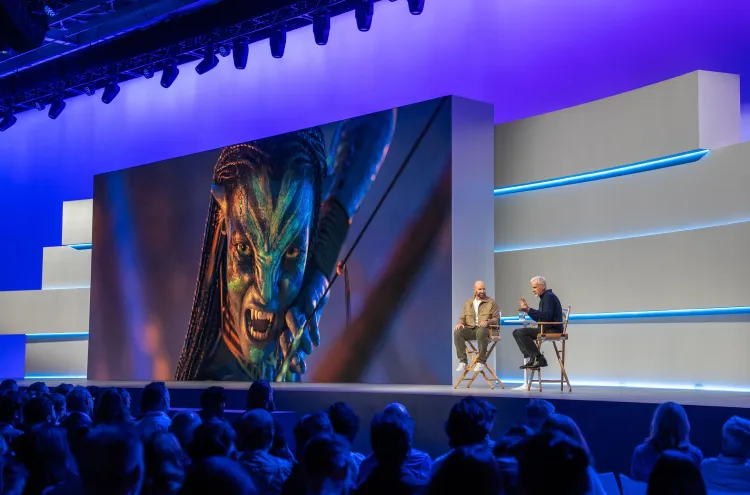
Cameron noted that mixed reality allows audiences to become inherently stereoscopic viewers. This shift inspired the creation of Lightstorm Vision, a company dedicated to producing high-quality stereoscopic content. For Meta, the partnership provides a valuable opportunity to work directly with a filmmaker who combines creative vision with technical expertise, helping the company refine its mixed reality storytelling tools.
Horizon TV and Exclusive Previews
As part of this collaboration, Meta Quest users can now access exclusive preview content, including clips from Cameron’s upcoming Avatar 3 film, through the headset’s Horizon TV app. This represents one of the first practical applications of stereoscopic content in consumer VR, blending linear narrative filmmaking with immersive viewing technology.
Andrew Bosworth, Meta’s Chief Technology Officer, emphasized the importance of having a partner like Cameron who can both guide and critique the technical aspects of the platform. “James isn’t just a great storyteller,” Bosworth said. “He also identifies where our technology may fall short in meeting the needs of creators, which is invaluable for development.”
Linear Storytelling in a Mixed Reality Context
Cameron’s approach to VR and mixed reality differs from much of the interactive content seen in the space. While some virtual reality projects focus on interactivity and placing viewers at the center of the narrative, Cameron continues to favor a “lean-back” experience that frames stories in a linear, cinematic format.
“Everything I’ve spent my career doing is telling stories in a rectangle,” Cameron explained. “That rectangle may seem restrictive, but it actually directs the viewer’s eye and enhances the narrative.” By preserving the traditional cinematic composition while leveraging stereoscopic depth, Cameron believes mixed reality can combine the best aspects of both worlds: immersion without losing narrative focus.
AI and Creativity in Filmmaking
During discussions at Meta Connect, Cameron also shared his perspective on artificial intelligence in creative work. He acknowledged that AI can match human creativity in many respects but lacks the “unique lived experience” that informs artistic expression. This distinction, he argues, ensures that human creators remain central to storytelling, even as AI assists in production, visual effects, and simulation.
Cameron and Bosworth’s conversation highlighted that AI can augment the creative process by handling repetitive or technical tasks, allowing filmmakers to focus on narrative and emotional impact. However, Cameron stressed that the creative vision, informed by human experiences, remains irreplaceable.
Challenges and Opportunities for Mixed Reality
Mixed reality headsets, as opposed to flat-panel 3D screens, inherently support stereoscopic viewing, opening new possibilities for cinematic storytelling. Cameron sees this technology as the long-awaited platform to fully realize his decades-long advocacy for stereoscopic media. Meanwhile, Meta gains a unique advantage by demonstrating the potential of its devices for immersive entertainment, bridging the gap between gaming, VR, and cinematic storytelling.
The partnership also addresses broader industry challenges. 3D content has historically struggled to gain traction outside cinema due to technical limitations and poor user experiences on flat-panel devices. By leveraging headsets that naturally support stereoscopic depth, filmmakers can now create more impactful and accessible 3D experiences for a wide audience.
The Future of Immersive Entertainment
Looking forward, Cameron and Meta plan to continue exploring stereoscopic production and distribution in mixed reality, aiming to expand beyond previews and into full-length narrative content. This initiative represents a critical step toward integrating traditional cinematic storytelling techniques with emerging immersive technologies, while also exploring how AI can enhance production workflows without replacing human creativity.
By blending cutting-edge hardware, expert creative guidance, and careful attention to narrative structure, the collaboration sets a new standard for immersive entertainment. Viewers can expect a more engaging and visually dynamic experience, with stereoscopic depth adding a new dimension to familiar stories.
Conclusion: Bridging Technology and Storytelling
James Cameron’s work with Meta demonstrates how established filmmaking techniques can coexist with emerging technologies such as AI and mixed reality. By maintaining a focus on linear narrative, stereoscopic storytelling, and creative human input, this partnership aims to redefine how audiences experience cinematic content. As VR and mixed reality technologies continue to evolve, the collaboration highlights the potential for innovation that preserves artistic integrity while embracing technological advancement.