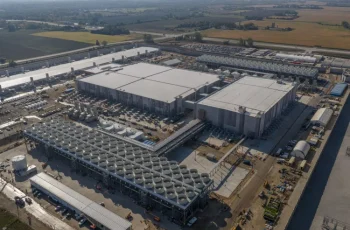
Nvidia has recently announced a strategic collaboration with the Electric Power Research Institute (EPRI) and several major industry players to harness artificial intelligence in addressing the growing challenges facing the electrical grid. Ironically, many of these challenges are driven by the very technology meant to solve them—AI itself. The explosive growth of AI workloads and data centers is significantly increasing electricity demand, creating new pressures for grid operators. This partnership highlights the emerging intersection between advanced computing and infrastructure management, demonstrating how technological innovation both generates and resolves complex energy demands.
The Open Power AI Consortium: Collaboration Across Sectors
The initiative, named the Open Power AI Consortium, brings together a diverse coalition of utilities, technology companies, and research organizations to develop domain-specific AI models aimed at optimizing electrical grid performance. Members include major U.S. utilities such as PG&E, Con Edison, Constellation Energy, Duke Energy, and the Tennessee Valley Authority, along with NEOM’s ENOWA energy and water company. Leading technology firms like Microsoft and Oracle also participate.
The models developed by the consortium will be open-sourced, allowing researchers in both academia and industry to access and test solutions. This open-access approach fosters innovation and ensures that the benefits of AI-driven grid optimization extend beyond individual companies to the broader energy ecosystem.
Rising Energy Demand Driven by AI and Data Centers
The power industry is grappling with surging electricity demand, largely driven by the exponential growth of AI and large-scale data centers. According to the International Energy Agency, U.S. electricity consumption is projected to grow by approximately 4% per year over the next several years, nearly double the rate observed in 2023. As AI models become larger and more computationally intensive, data centers require increasingly vast amounts of energy to maintain performance and cooling systems. This rising demand strains existing infrastructure and increases the risk of outages, particularly during periods of peak usage.
Complementing Renewable Energy with AI Optimization
While the deployment of renewable energy sources such as solar and wind is critical, AI can enhance grid efficiency beyond mere power generation. Companies like Microsoft have invested heavily in renewable energy projects, adding hundreds of megawatts of solar capacity and partnering on multi-gigawatt renewable initiatives in the U.S. and Europe.
However, generation alone cannot fully address peak demand challenges. AI can optimize electricity distribution by shifting non-urgent workloads to periods of lower demand, reducing strain on the grid and unlocking unused capacity. Research indicates that such strategies could provide an additional 76 gigawatts of effective capacity, equating to roughly 10% of peak electricity demand in the United States.
Domain-Specific AI Models for Grid Reliability
The consortium will develop AI models tailored to specific grid challenges, capable of analyzing real-time performance, predicting demand surges, and recommending operational adjustments. These models will help utilities anticipate stress points on the network, enabling proactive load balancing, fault detection, and improved reliability.
By openly sharing these tools, the consortium encourages broader collaboration and innovation, facilitating solutions that can be scaled across multiple regions and energy systems worldwide.
AI as Both Driver and Solution
This partnership highlights a unique paradox: AI is both a primary driver of increased energy demand and a critical tool to manage it. While high-performance computing for AI workloads intensifies pressure on power systems, intelligent algorithms can optimize electricity consumption, predict demand, and prevent outages. By deploying AI across grid operations, utilities can increase resilience, reduce waste, and maintain stable energy delivery even as demand grows.
Long-Term Implications for Utilities and Tech Companies
The initiative exemplifies a broader trend in which tech companies are integrating renewable energy investments with AI-driven operational strategies to secure competitive advantages. By combining AI optimization with solar, wind, and other clean energy sources, the power sector can develop a more sustainable, efficient, and resilient energy ecosystem.
Nvidia’s collaboration with EPRI and the consortium members represents a proactive approach to infrastructure challenges, demonstrating how interdisciplinary cooperation can address complex energy and technological issues.
Conclusion: AI-Driven Solutions for a Sustainable Grid
Nvidia’s partnership with the Open Power AI Consortium is a pivotal step in harnessing AI to meet the growing demands of modern electricity grids. As energy requirements from data centers and AI workloads continue to rise, innovative solutions like domain-specific AI models, open-source collaboration, and operational optimization will be essential.
By integrating advanced AI with renewable energy strategies, utilities and tech companies can ensure that the grid remains efficient, reliable, and sustainable. This collaboration not only addresses immediate challenges but also establishes a framework for future energy systems that can adapt to evolving technological demands.