Transforming Vehicle Inspections with AI
Self Inspection, a San Diego-based startup, is rapidly transforming the vehicle inspection process by leveraging cutting-edge artificial intelligence. Founded in 2021, the company recently raised \$3 million in a seed funding round co-led by Costanoa Ventures and DVx Ventures, with participation from Westlake Financial, which handles over a million vehicle transactions annually. This funding demonstrates strong investor confidence in Self Inspection’s AI-driven approach, which aims to simplify and modernize a traditionally slow, labor-intensive, and costly procedure in the \$30 billion global vehicle inspection market.
The company’s proprietary AI models have been trained on one of the largest datasets of damaged vehicles, enabling the system to accurately identify damages, assess their severity, and generate precise repair cost estimates. These AI-generated inspection reports provide a level of detail comparable to professional body shop evaluations, outlining labor requirements, replacement parts, and estimated repair costs. By automating these processes, Self Inspection ensures consistency, accuracy, and efficiency for dealerships, auto lenders, rental agencies, and fleet operators, setting a new industry benchmark for quality and reliability.
Accessible and User-Friendly Technology
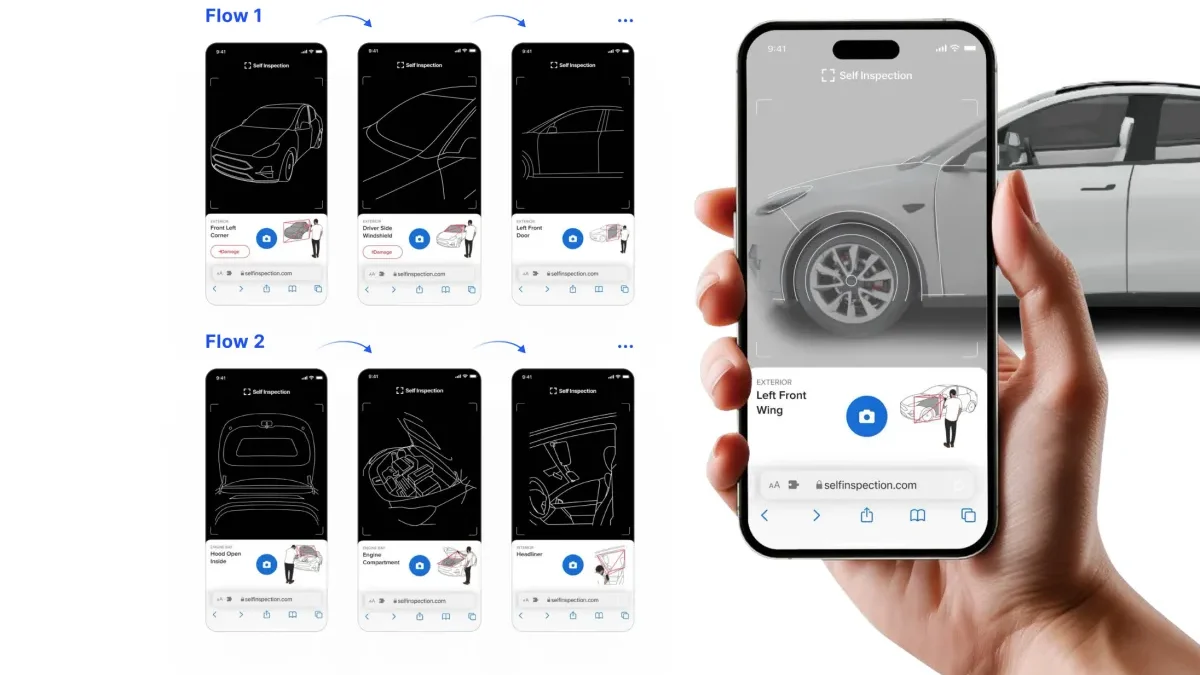
Unlike many competitors that rely on specialized hardware or expensive equipment, Self Inspection’s solution only requires a smartphone camera. Its software can optionally integrate data from a vehicle’s OBD2 port for additional diagnostic information. The platform is entirely web-based, removing the need for standalone apps, and users can easily access the inspection interface through a link sent via email or text message. This simple yet effective workflow lowers barriers for professionals and customers alike, allowing high-quality inspections to be conducted quickly and efficiently.
Self Inspection also offers a configurable back-end interface that allows clients to customize inspection workflows according to their unique needs. Fleets or vehicle marketplaces can prioritize high-wear areas, include checks for electric vehicle components, or adjust inspection steps to match internal policies. This flexibility distinguishes Self Inspection from competitors with rigid inspection processes, giving businesses greater control and adaptability while maintaining high-quality results.
Market Adoption and Growth Potential
Self Inspection has already attracted notable clients, including Avis, CarOffer (a digital wholesaler owned by CarGurus), and Westlake Financial. The newly secured funding will support scaling operations, advancing product development, and expanding into new markets. CEO Constantine Yaremtso emphasized that the platform streamlines inspections, accelerates vehicle turnover, and empowers anyone to conduct professional-quality evaluations using just a smartphone.
Investors, including Karim Bousta from DVx Ventures, believe Self Inspection has the potential to redefine industry standards by combining AI-driven accuracy with user-friendly design. While competitors like UVEye have raised hundreds of millions for AI-powered drive-through inspections, Self Inspection’s smartphone-based solution offers a lightweight, accessible alternative that can serve a broader client base and fit seamlessly into existing workflows.
Industry Implications and Future Outlook
The global vehicle inspection industry has long been constrained by inefficiency, inconsistent results, and high costs. AI-driven platforms like Self Inspection can reduce operational overhead, increase accuracy, and enhance customer satisfaction. For dealerships, rental agencies, and financial institutions, this technology means faster vehicle transactions, fewer errors, and improved reliability.
As the automotive industry evolves, particularly with the growing adoption of electric vehicles and autonomous technologies, inspection requirements are becoming more complex. Self Inspection’s configurable system allows clients to include additional checks, such as verifying EV charging cables, battery health, and advanced sensor functionality. This adaptability positions the company as a future-proof solution capable of addressing emerging inspection needs and technological trends.
Moreover, the rise of digital marketplaces and online vehicle sales has increased demand for transparent, accurate inspection reports. Self Inspection’s platform can provide standardized, thorough, and verifiable reports, building trust between buyers and sellers while reducing disputes over vehicle condition. The scalability and flexibility of AI-driven inspection platforms make them ideal for global expansion, particularly in markets where vehicle turnover is high or regulatory compliance is stringent.
Self Inspection exemplifies how AI can revolutionize traditional industries. By offering a scalable, accurate, and accessible inspection process, the company is poised to reshape how vehicles are assessed, maintained, and sold. Its technology demonstrates that startups can leverage artificial intelligence to create value, reduce costs, improve services, and provide seamless experiences across automotive and fleet management sectors. As AI adoption continues to grow, solutions like Self Inspection are likely to set the standard for efficiency, reliability, and innovation in the vehicle inspection market worldwide.